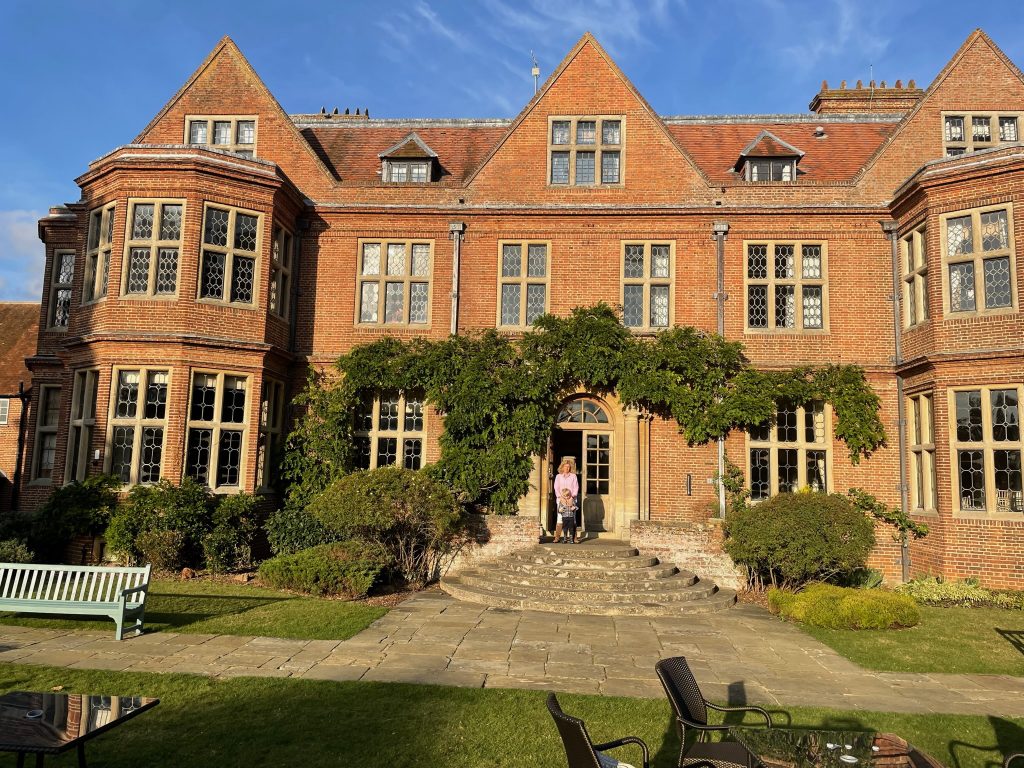
About a mile outside the village sits Horwood House, now a hotel and conference centre. Originally the site of a medieval rectory that J.J Sheahan referred to as ‘Rectory House’ in his 1861 book A History of Buckinghamshire. At that time, the estate was around 400 acres and was owned by Philip Dauncey, having, according to Sheahan, previously been owned by the Pigott, Styles, Carter, Adams and Langston families.
Rectory House was demolished in 1911 and Horwood House was built in its place by Frederick Denny. Denny was an Irish entrepreneur who’d made his fortune in the meat trade (predominantly sausages). Legend has it that Maud Denny, his aristocratic wife, saw an Arts and Crafts style house in the west country and wanted one in a similar style. Lucky for her that her husband had the wealth to build one, although it was a crying shame he knocked down the medieval building to do it. When Denny bought the estate, it came with several farms, a plethora of cottages, the Shoulder of Mutton pub and hundreds of acres of park and farm land in and around the village. It also made him lay rector or patron of St Nicholas church. According to locals, the Dennys very much adopted the traditional role of village squire and lord of the manor.